

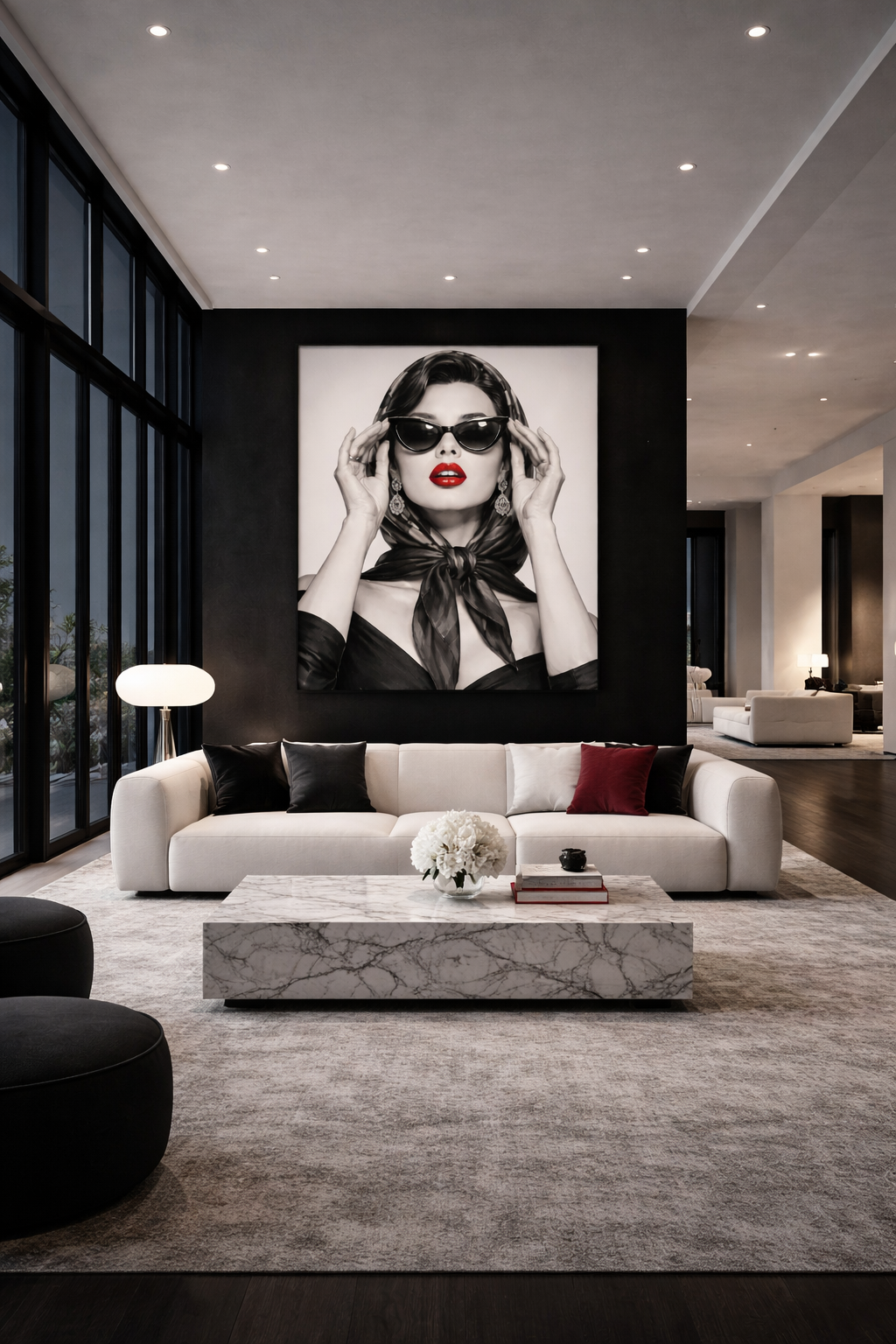
There’s a decorating principle interior designers swear by: when in doubt, go bigger. Nothing else you can do to a living room wall — no gallery arrangement, no collection of small prints, no decorative shelf — delivers the visual impact of a single, well-chosen oversized piece of art.
But “oversized” isn’t just about picking the largest canvas you can find. Getting it right means understanding scale, placement, proportion, and style. Get those four things right and oversized art looks intentional and transformative. Get them wrong and even an expensive piece can make a room feel awkward and unbalanced.
This guide covers everything — from calculating the right dimensions for your specific wall, to placement rules, style recommendations, and the most common mistakes people make when buying large-scale art for the first time.
Why oversized art works (and when it doesn’t)

The appeal of oversized art isn’t just aesthetic — it’s psychological. A large piece anchors a room. It gives the eye somewhere to land, creates a clear focal point, and makes the rest of your furniture feel intentional rather than scattered. In rooms with high ceilings, large windows, or open floor plans, oversized art is often the only thing that can hold the space together visually.
The impact is proportional. A 60-inch canvas in a room with 10-foot ceilings reads as bold and confident. The same canvas in a small apartment living room with 8-foot ceilings reads as overwhelming. Scale is everything — and it’s entirely relative to your space.
When oversized art is the right call
- You have a large, bare wall that smaller pieces keep failing to fill
- Your living room has high ceilings (9 feet or more) that make the room feel empty
- You want a clear focal point in an open-concept or great room layout
- Your furniture is large-scale — a long sectional, oversized sofa, or statement coffee table
- You prefer a clean, minimalist look over a layered gallery wall
- You’re hanging art above a fireplace, which demands strong visual weight
When to reconsider
Oversized art isn’t always the answer. In rooms under 200 square feet, a very large piece can feel claustrophobic. If your walls are already visually busy — bold wallpaper, a large window, architectural details — competing with an oversized canvas will fragment the room rather than anchor it. In these cases, a medium-large piece (36–48 inches wide) often achieves a better balance.
Designer tip
Before buying, tape newspaper or kraft paper to your wall in the exact dimensions you’re considering and live with it for 24–48 hours. What looks right in a product photo can read very differently in your actual space.
How to find the right size for your wall
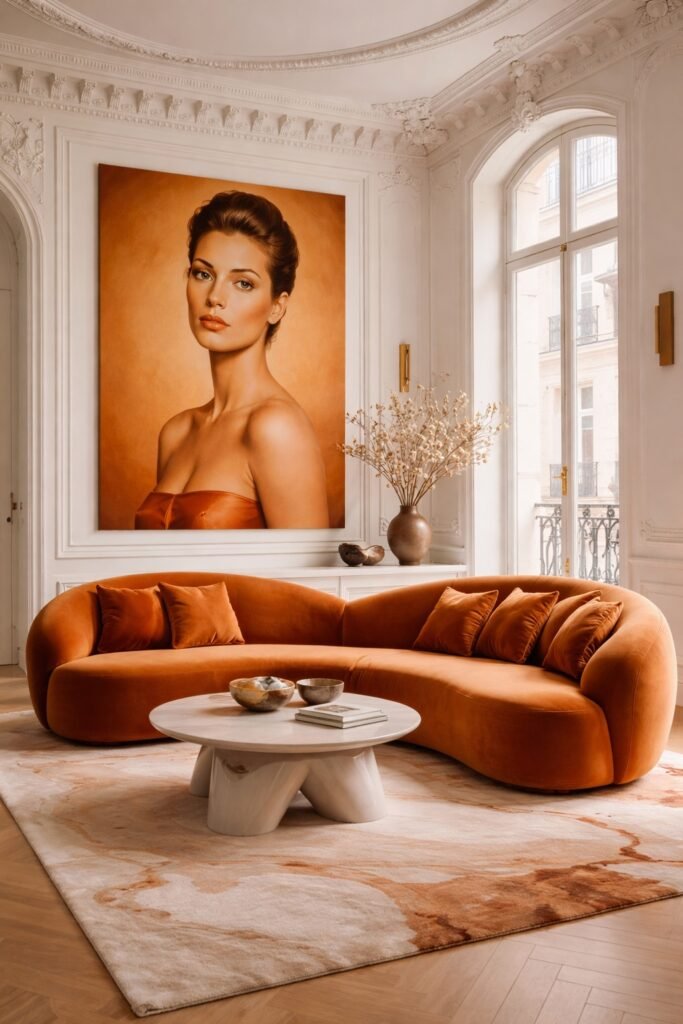
Most people undersize their wall art. It’s the single most common decorating mistake, and it’s understandable — a large piece feels like a commitment. But there’s a reliable formula designers use to take the guesswork out of sizing.
The two-thirds rule
Your art should cover approximately two-thirds of the available wall width. So if your wall is 120 inches wide, you’re looking for art that’s roughly 80 inches across. If you’re hanging above a sofa, measure the sofa’s width instead — the art should span 60–75% of that length.
| Wall / Furniture Width | Recommended Art Width | Classification |
|---|---|---|
| 60 inches (5 ft) | 36–45 inches | Large |
| 72 inches (6 ft) | 48–54 inches | Large to Oversized |
| 84 inches (7 ft) | 54–63 inches | Oversized |
| 96 inches (8 ft) | 60–72 inches | Oversized |
| 120 inches (10 ft) | 72–90 inches | Oversized to Extra Large |
Height: the often-forgotten dimension
Width gets all the attention, but height matters just as much. In a room with 9- or 10-foot ceilings, a piece that’s only 24 inches tall will look like a postage stamp no matter how wide it is. As a general rule, the height of your art should be at least 40% of the ceiling height. In a room with 9-foot (108-inch) ceilings, that means your art should be at least 43 inches tall — and ideally taller.
Hanging height
The standard recommendation is to hang art so that the center of the piece sits at eye level — typically 57 to 60 inches from the floor. For oversized art above a sofa, aim for 6 to 8 inches of space between the bottom edge of the frame and the top of the sofa cushions. This keeps the art visually connected to the furniture below without the gap feeling awkward.
The rule of thumb
Art width ≥ ⅔ of the wall or furniture it hangs above. Center point at 57–60 inches from the floor. Bottom edge 6–8 inches above sofa top. When in doubt, err larger — you can almost never size down in execution.
Best placement spots in a living room
Oversized art works in multiple locations in a living room, but each spot has different requirements and visual implications. Here are the four most common placements and what makes each one work.
Above the sofa
This is the most popular location for oversized art, and for good reason — the sofa gives the art a strong horizontal anchor. The piece should span at least 60% of the sofa’s length, and the 6–8 inch gap rule above the cushions is non-negotiable. Go wider than tall here: horizontal or square canvases tend to look better above sofas than tall vertical pieces, which can feel top-heavy.
Above the fireplace
A fireplace mantel is a natural focal point, and a large piece of art above it amplifies that power dramatically. Size to the width of the firebox opening or the mantel shelf — whichever is larger — and go no wider than the outer frame of the surround. Leaning the art against the wall on the mantel instead of hanging it is a popular approach that feels relaxed and editorial.
On the primary feature wall
In an open-plan space, one wall typically functions as the visual anchor for the entire room. A single oversized canvas on this wall does more to define the room’s aesthetic than almost any other design decision. Leave the surrounding walls relatively clear to let the piece breathe and command attention.
Leaning against the wall
Leaning oversized art — either on the floor or propped on a mantel — is one of the strongest trends in contemporary interior design. It gives even the most serious piece an effortless, lived-in quality. Works best with canvases that have clean, minimal frames (or no frame at all), and with art that’s genuinely large: a canvas needs to be at least 40 inches tall to look intentional rather than forgotten when leaned.
Styling tip
When leaning art on the floor, layering a second, smaller piece in front of it adds depth and dimension. This works especially well in bedrooms and living rooms with minimalist furniture — the layered lean creates visual interest without the commitment of a full gallery wall.
Which art styles work best at large scale
Not all art translates well to oversized dimensions. A portrait that’s charming at 18×24 inches can become confrontational at 48×60. A detailed landscape that rewards close looking can become muddy at a distance. The styles that tend to work best at scale share a common trait: they read clearly from across the room.
Abstract art
Bold shapes, expressive brushwork, and strong color contrasts are built for large-scale impact. Abstract pieces lose nothing — and often gain a great deal — when scaled up.
Best for: modern + contemporary rooms
Minimalist line art
Sparse, clean line drawings on a light ground have an architectural quality that looks stunning at large scale. The negative space becomes part of the composition.
Best for: Scandinavian + minimalist rooms
Large-format photography
Landscape, architectural, or nature photography printed at full size has a cinematic quality. Keep it unframed or use a thin float frame for the cleanest look.
Best for: modern + coastal rooms
Bold botanical prints
Overscale botanical or floral prints — think single stems filling the entire canvas — have a graphic quality that reads beautifully at large dimensions.
Best for: transitional + boho rooms
Gestural oil paintings
Loose, expressive oil paintings with visible brushstrokes gain tremendous presence at large scale. The texture and movement read differently from a distance than close up.
Best for: eclectic + maximalist rooms
Black & white photography
Monochrome photography is safe with any palette and adds sophistication at any scale. It works in both traditional and contemporary spaces without competing with existing colors.
Best for: any style
“The best oversized art doesn’t fill the wall — it activates the whole room.”
What to avoid at large scale
Highly detailed paintings with fine brushwork and complex scenes can become visually exhausting as a focal point at large dimensions. Very literal or illustrative subject matter — detailed portraits, busy cityscapes, scenes with many figures — tends to overwhelm at oversized scale. Abstract, graphic, and large-format photographic work almost always translate better.
5 oversized art mistakes to avoid
- 1Hanging it too highThe most common installation mistake. Art should be centered at eye level (57–60 inches from the floor), not pushed up toward the ceiling. Hanging high creates dead space between the art and your furniture and makes the room feel disconnected.
- 2Choosing the wrong orientationVertical art above a wide sofa creates visual tension. Horizontal or square formats almost always work better in living room placements. Reserve tall, vertical pieces for narrow walls, stairwells, or flanking a fireplace as a pair.
- 3Ignoring the room’s color paletteA large piece of art is now a dominant color element in your room. Before you buy, pull the primary colors from the art and check them against your existing palette. They don’t need to match, but they need to work together — bold contrast can be stunning, but accidental clash is hard to fix without repainting.
- 4Over-matting or over-framingLarge canvases with oversized mats and heavy frames can end up looking more like the frame than the art. For oversized pieces, minimal or frameless presentation typically reads better — a simple floater frame or no frame at all keeps the focus on the work itself.
- 5Buying before measuringThis sounds obvious but it happens constantly. Measure your wall, measure your sofa, calculate the two-thirds rule, then shop. Starting from a measurement rather than a product makes the entire process faster and eliminates the most expensive kind of buyer’s remorse.
Common mistake
Buying oversized art online without checking the frame depth. Many large canvases have a 1.5–2 inch gallery-wrap depth. This is usually a positive feature (it means the art can hang without a frame), but it can conflict with certain wall-mounting hardware. Always check the depth alongside width and height.
Buying tips: what to look for
Shopping for oversized art requires a slightly different lens than buying smaller pieces. Here’s what to pay attention to before you commit.
Canvas vs. print vs. original
At oversized dimensions, the three main options differ significantly in quality and price. Giclee prints on canvas are the most common and affordable option — high-quality digital reproductions stretched over a wooden frame. They look excellent in most living rooms and are available in custom sizes. Original paintings have an irreplaceable physical quality — texture, depth, and the minor imperfections that make a piece feel alive — but cost significantly more. Metal and acrylic prints offer a contemporary, frameless option that works particularly well for photography and graphic work.
Weight and wall hardware
A 60-inch canvas can weigh 15–25 pounds or more. Make sure you’re hanging into wall studs or using heavy-duty drywall anchors rated for the weight. French cleats are an excellent option for very large pieces — they distribute weight evenly across the full width of the canvas and make leveling easy.
Where to buy oversized art
The options have expanded significantly in recent years. Etsy has become one of the best sources for original oversized canvases and custom-size prints from independent artists. Saatchi Art and Singulart offer curated original work at multiple price points. Society6 and Minted offer high-quality print-on-demand in custom sizes. For more accessible price points, Wayfair and Amazon carry an enormous selection of gallery-wrapped canvases in oversized dimensions.
Buying tip
When buying from an online marketplace, search specifically by dimension — most platforms allow you to filter by size. Searching “60 inch canvas wall art” or “48×60 abstract painting” will get you to the right results faster than browsing by style alone.
Budget expectations
Oversized art spans an enormous price range. A high-quality giclee print on stretched canvas in a 48×60 size typically runs $150–400. Hand-painted original canvases at that size start around $400 and can easily reach $1,500–3,000 from established artists. If budget is a constraint, a print-on-demand service with a strong original source image will get you 90% of the visual impact for a fraction of the cost of an original.
Frequently asked questions
What counts as “oversized” art for a living room?
There’s no exact definition, but generally a piece is considered oversized when it spans 48 inches (4 feet) or more in its longest dimension. In interior design terms, oversized typically means a canvas or print large enough to function as the sole focal point of a wall without needing additional pieces around it.
Can you put oversized art in a small living room?
Yes, with care. In a small room, a single large piece often works better than multiple small ones because it simplifies the visual field instead of cluttering it. The key is not going so large that the art reads as overwhelming — in a small room, aim for something that covers about half the wall width rather than the standard two-thirds. Keep surrounding walls clear.
Should oversized art match the sofa or other furniture?
Not match, but relate. The colors in your art should work harmoniously with the room’s existing palette — complementing or contrasting intentionally rather than clashing accidentally. If your sofa is neutral, almost anything works. If it’s a bold color, look for art that echoes or subtly references that tone.
How much space should be between oversized art and the ceiling?
At minimum, 8–10 inches between the top of the frame and the ceiling. Closer than that can feel cramped, especially in rooms with standard 8-foot ceilings. In rooms with taller ceilings, you have more flexibility — centering the art optically between the ceiling and the furniture below often looks better than strict adherence to the eye-level rule.
Is it better to lean or hang oversized art?
Both work, and the choice is largely aesthetic. Hanging is more formal and permanent; leaning is more casual and easy to change. Leaning works particularly well for large canvases in contemporary or eclectic spaces. If you’re leaning on the floor, make sure the piece is large enough to look intentional — at least 40 inches tall, ideally more.
What is the best type of oversized art for a modern living room?
Abstract canvases, large-format photography, and minimalist line art tend to work best in modern living rooms. Look for pieces with strong graphic qualities — bold color fields, clean geometric forms, or expressive gestural marks — that read clearly from a distance. Avoid highly detailed or illustrative work, which can feel at odds with the clean lines of modern interiors.