



Horizontal paintings for living room spaces are making a powerful comeback in modern interior design. These wide-format artworks offer a unique solution for those challenging above-sofa walls, empty dining room stretches, and contemporary open-concept spaces that demand statement pieces with visual impact.
Whether you’re working with a sprawling sectional or a petite loveseat, understanding how to select and position horizontal paintings can transform your living room from bland to breathtaking. In this comprehensive guide, we’ll explore everything from sizing principles to placement strategies that professional interior designers use daily.
Why Horizontal Paintings for Living Room Walls Create Perfect Balance
The human eye naturally follows horizontal lines, making landscape-oriented artwork ideal for spaces where you want to create calm, expansive feelings. Unlike vertical pieces that draw the eye upward, horizontal paintings for living room areas encourage visual flow across the space, much like the way a coastal landscape painting naturally guides your gaze along the horizon.
According to interior design experts at Architectural Digest, wide-format artwork complements the horizontal lines found in most furniture pieces—sofas, console tables, and credenzas—creating a cohesive design language throughout the room.
This visual harmony makes horizontal paintings particularly effective for:
- Above sofas and sectionals
- Over console tables and sideboards
- In dining areas above buffets
- Long hallway walls
- Above fireplace mantels
The Golden Sizing Rule for Horizontal Paintings
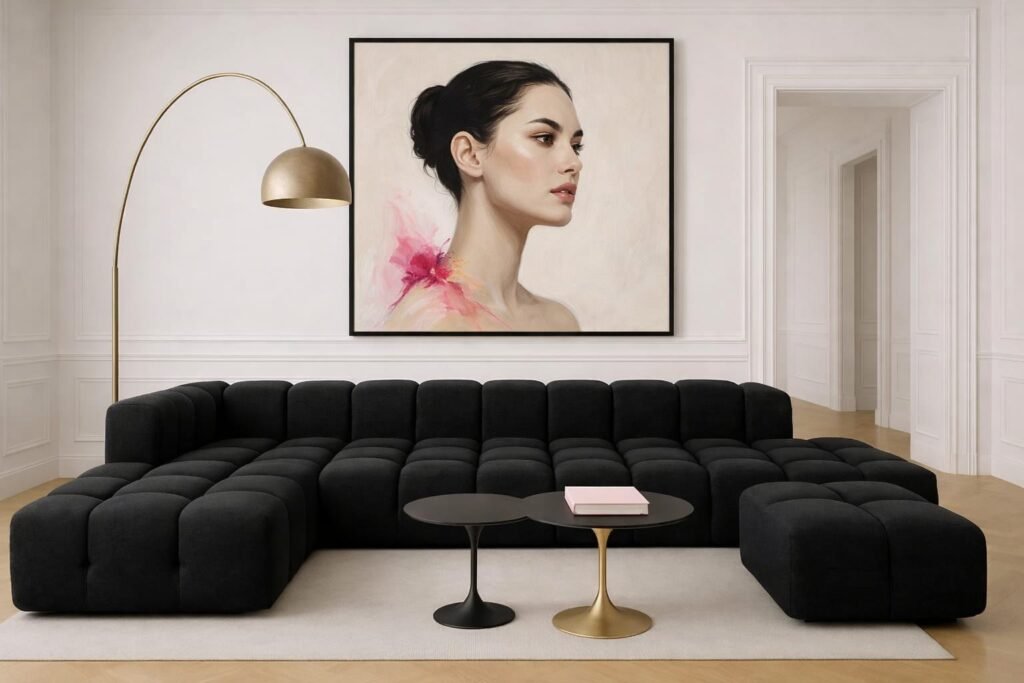
Professional designers follow the two-thirds rule: your horizontal painting should span approximately two-thirds to three-quarters the width of the furniture beneath it. For a standard 84-inch sofa, you’re looking at artwork between 56 and 63 inches wide.
Small paintings for living room applications work beautifully when grouped in sets of three or five. If you prefer a single statement piece, ensure it maintains that crucial two-thirds proportion to avoid the “floating postage stamp” effect. Contemporary geometric abstracts in the 40-60 inch range offer perfect proportions for most standard living rooms.
Common Size Mistakes to Avoid
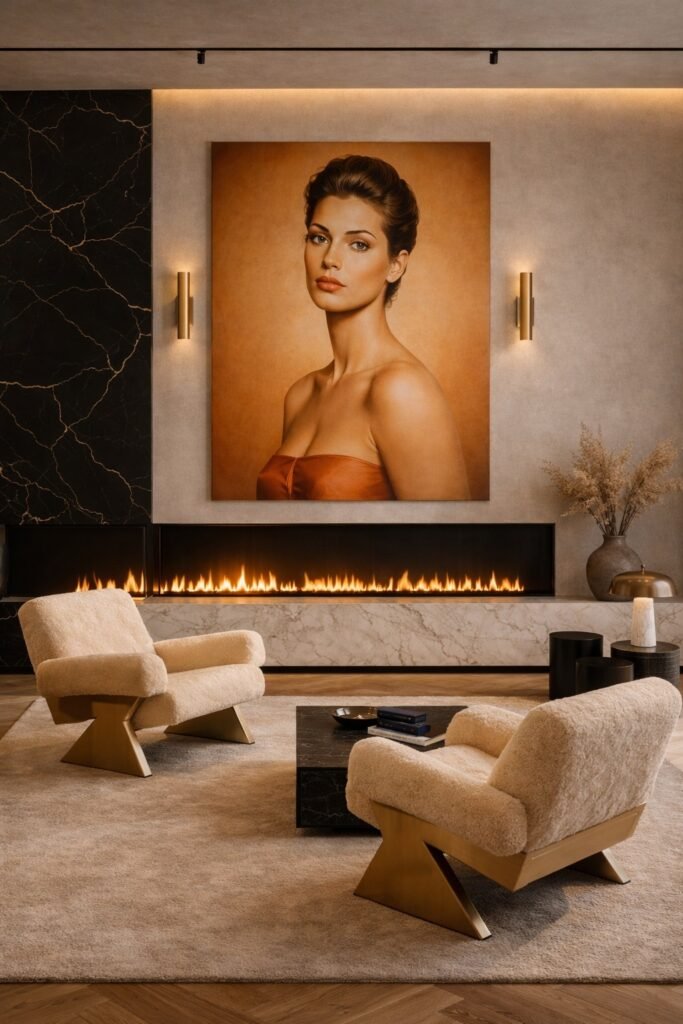
Going too small is the most frequent error. A 24×36-inch painting might seem substantial in the store, but above an 8-foot sofa, it disappears. Conversely, oversized pieces that exceed your furniture width create visual imbalance.
The sweet spot? Aim for paintings between 40-60 inches wide for standard living rooms. For reference, explore our horizontal painting collection to see size options that work for various space configurations.
Color Psychology in Horizontal Paintings for Living Room Harmony
Your color choices dramatically impact room atmosphere. Cool blues and greens in horizontal paintings create serene, spacious feelings—perfect for smaller living rooms. Warm oranges, reds, and yellows energize spaces and work beautifully in north-facing rooms lacking natural light.
According to color theory research from the Smithsonian Design Museum, horizontal compositions emphasize the chosen colors’ psychological effects more than vertical orientations, making palette selection crucial.
For cohesive design, select horizontal paintings that incorporate at least one accent color from your existing décor. This doesn’t mean exact matching—complementary shades create sophistication while maintaining visual connection.
Perfect Placement Height for Horizontal Paintings
The museum standard—artwork center at 57-60 inches from the floor—applies to gallery walls, not furniture-adjacent pieces. For horizontal paintings for living room placement above sofas, maintain 6-12 inches between the furniture top and painting bottom.
This creates visual connection without crowding. In rooms with 8-foot ceilings, err toward the 6-inch gap. Taller spaces can accommodate up to 12 inches, preventing the artwork from appearing disconnected from the furniture below.
Special Considerations for High Ceilings
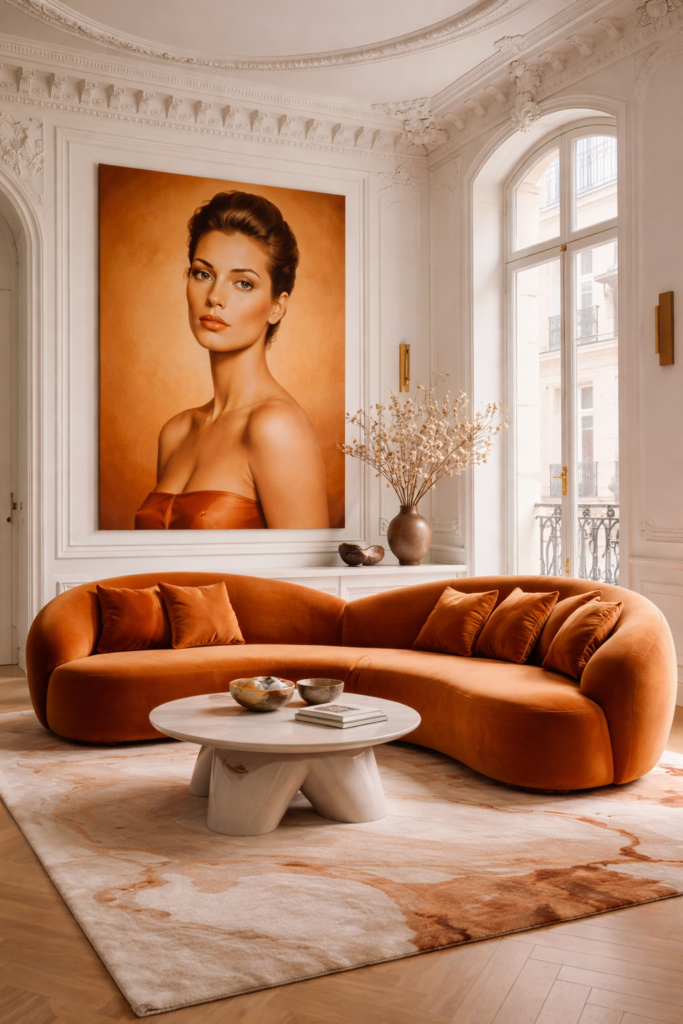
Rooms with 10+ foot ceilings benefit from stacking horizontal pieces vertically or creating gallery walls that incorporate both horizontal and vertical elements. This prevents artwork from floating in vast expanses of empty wall space.
Framing Horizontal Paintings for Living Room Display
Frame selection influences perceived size and style. Thin, minimal frames (1-2 inches wide) work best for contemporary spaces and maximize the painting’s visual impact. Traditional rooms accommodate ornate frames up to 4 inches wide.
For frameless contemporary appeal, canvas wraps—where the painting extends around the stretcher bars—eliminate framing costs while creating clean, modern aesthetics. Museum-quality frameless options are available through specialized art retailers.
Professional tip: Matte finishes reduce glare from windows and lighting, crucial for horizontal paintings in living rooms where furniture placement often positions artwork opposite light sources.
Matching Horizontal Painting Styles to Living Room Aesthetics
Abstract horizontal paintings suit modern minimalist spaces, offering visual interest without competing with clean-lined furniture. Traditional landscapes complement classic décor, while contemporary geometric designs bridge transitional styles.
Consider these style pairings:
- Modern minimalist: Bold abstract horizontals in monochromatic palettes
- Coastal: Seascape horizons in blues and sandy neutrals
- Industrial: Urban photography or mixed-media pieces with metallic elements
- Bohemian: Vibrant abstract horizontals with rich textures
- Scandinavian: Subtle nature scenes in muted earth tones
Lighting Your Horizontal Paintings for Maximum Impact
Proper illumination transforms good artwork into showstoppers. Picture lights—small fixtures mounted directly to frames—provide focused lighting without installation complexity. For the most professional look, track lighting or recessed adjustable fixtures offer flexibility.
Avoid direct sunlight on paintings to prevent fading. South and west-facing walls require UV-protective glazing or strategic placement away from windows. Natural north light provides ideal, consistent illumination without harsh UV exposure.
The International Association of Lighting Designers recommends 3000K warm white LED bulbs for residential artwork, balancing color accuracy with cozy ambiance.
Finding Your Perfect Horizontal Paintings for Living Room Transformation
Selecting horizontal paintings for living room spaces involves balancing proportions, colors, and personal taste. By following the two-thirds sizing rule, maintaining proper placement height, and choosing complementary colors, you create cohesive, professional-looking results.
Remember that even small paintings for living room use become impactful when grouped thoughtfully. Whether you invest in a single statement piece or curate a collection over time, horizontal artwork offers unmatched versatility for wide wall spaces.
Ready to transform your living room walls? Browse our curated collection of horizontal paintings designed specifically for modern living spaces, with expert sizing guidance and room visualization tools to ensure your selection looks perfect before you commit.
—
Need help choosing the right size? Our free room visualization tool lets you preview horizontal paintings in your actual space before purchasing. Try it now.